Michi-no-Eki Amami Oshima Sumiyo 奄美大島住用
Sumiyo is the southern gate of Amami Oshima — the station where the island road enters the mangrove country of the Sumiyo district in Amami city. The building adjoins the Mangrove Park, gateway to one of Japan's largest mangrove forests on the Yakugachi and Sumiyo rivers, and the station doubles as the wildlife gateway for the island's mountains: the home range of the Amami rabbit, the “living fossil” found only on this island and Tokunoshima. Everything here is subtropical — the produce, the light, and the pace — and the station is the practical base for the island's wild south.
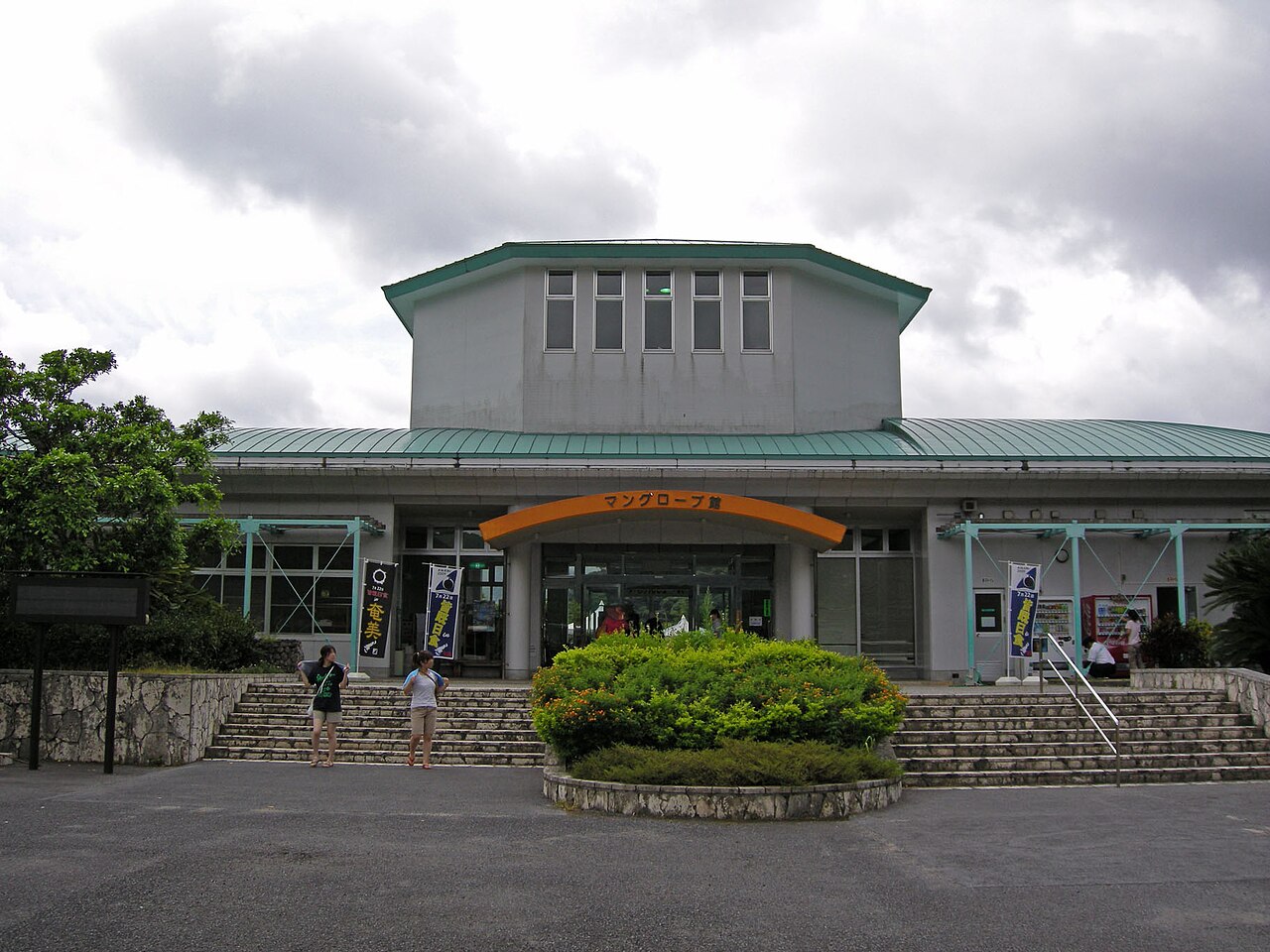
| Location | Amami Islands, Kagoshima |
|---|---|
| Address | 奄美市住用町石原478 (奄美市, Kagoshima) Romaji: Amami-shi Sumiyo-cho Ishihara 478, Kagoshima, Japan |
| Opening hours | Station (parking & toilets): 24 hours / Mangrove Park: 9:00–18:00 (Nov–Feb 9:00–17:30) / Canoe experience: 10:00–16:00 / World Heritage Centre: 9:00–17:00 (last entry 16:30) / Restaurant: lunch 11:00–14:00 / tea time 11:00–16:00 / Shop (in Mangrove Park): 9:00–18:00 / Shop (in World Heritage Centre): 9:30–16:30 / Segway experience: by reservation (tel. 090-1517-3973) |
| Closed | Jan 1 – Jan 3 |
| Parking | Large vehicles: 10 spaces; Standard cars: 179 spaces (including 7 accessible spaces) |
| Phone | 0997-56-3355 |
| Map | View on Google Maps |
| Official website | http://www.mangrovepark.com/ |
| Registered | 2000 (registration round 16) |
Facilities at a glance
All facilities
Local specialities
Start with keihan: Amami's ceremonial chicken rice — shredded chicken, egg, mushrooms and papaya pickles in a rich chicken broth poured over rice — is the island dish, served at the station for travellers who may not reach a city restaurant. The market carries the island pantry: tankan citrus and passion fruit in season, island shallots, brown-sugar goods from the cane fields, and Amami's kokuto shochu, the brown-sugar spirit distilled only on these islands. Mangrove honey and the crafts of the island — mud-dyed Oshima tsumugi silk textiles among them — complete the shelves.
Sights and surroundings
The Mangrove Park next door puts you on the water: canoe tours paddle the tidal channels through the mangrove forest, past mudskippers and crabs, with the birdlife of the rivers above. The surrounding mountains are the Amami rabbit's kingdom — the endangered black rabbit, active at night, is watched for on the park's evening nature programmes and the forest roads after dark (drive slowly: the rabbits own the roads). Sumiyo's coast road continues to the island's southern capes and the ferry side for Kakeromajima, while the island road north returns to Amami city and the airport.
Making the most of your stop
Wildlife sets this station's timetable, so plan by day and night. By day: the Mangrove Park next door, with canoe tours through the tidal forest when the tide serves — the channels, the mudflats and the birdlife are a complete ecosystem at paddle height, and the park is the practical reason most visitors reach Amami's south at all. Eat keihan at the station: Amami's chicken-rice ceremony dish is the island's table ambassador, and reaching a city restaurant is not guaranteed on a southern itinerary. The market's island pantry — tankan citrus, passion fruit, brown-sugar goods, kokuto shochu — is the souvenir stop for the whole island's south. By night, the forest roads belong to the Amami rabbit: the park's evening nature programmes are the organised way to look, and any driver on these roads after dark should go slowly — the “living fossil” you are hoping to glimpse and the car in front of you are sharing the same dark. Fuel, food and information all thin out south of here; Sumiyo is the gate, treat it as one.
Practical details checked 2026-11-04 against: the National Michi-no-Eki Association station page (michi-no-eki.jp), read 2026-11-04
Source: station details from the Kyushu Michi-no-Eki portal (Kyushu Regional Development Bureau) and the national Michi-no-Eki association — https://www.michi-no-eki.jp/stations/views/19801
More roadside stations in Kagoshima
- Tokunoshima とくのしま
- Kiire 喜入
- Kirishima 霧島
- Hiwaki 樋脇
- Matsuyama 松山
- Akune 阿久根
- Nagashima 長島
- Kuni no Matsubara Osaki くにの松原おおさき