Michi-no-Eki Kyotamba Ajimu no Sato 京丹波 味夢の里
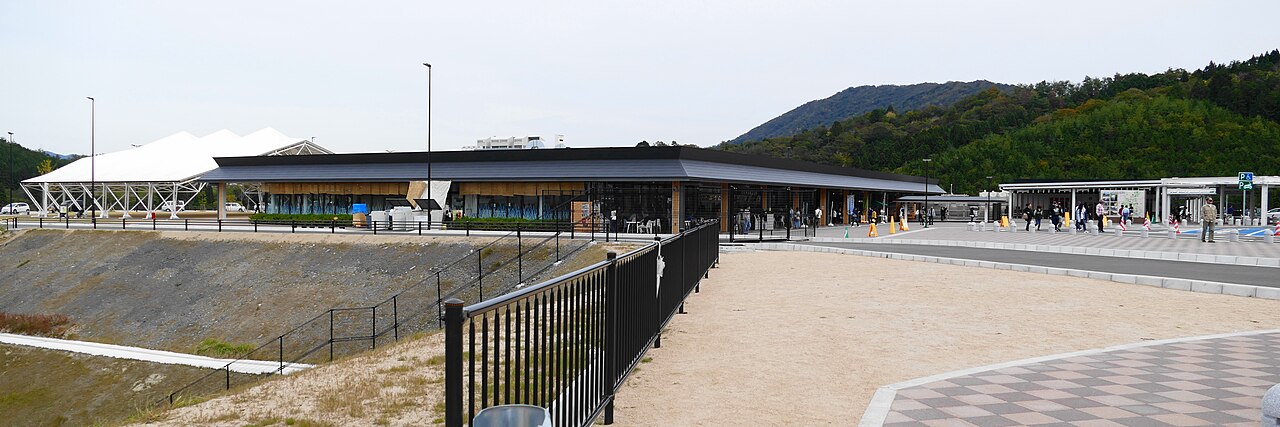
Ajimu-no-Sato — “the home of flavours” — is the farm gate of Kyotamba, the chestnut-and-black-soybean country in Kyoto's green interior. The station stands in the Mizuho district where the Tamba hills roll toward the Japan Sea side, and its shelves carry the two crops that made Tamba famous across Japan: Tamba chestnuts, the largest and sweetest of Japanese chestnuts, and Tamba black soybeans, whose October kuro-edamame (black soybeans in the pod) draw buyers from across the country. It opens at 6 in the morning — farm country hours — and doubles as the village market for Mizuho itself.
| Location | Nantan, Kyoto |
|---|---|
| Address | 船井郡京丹波町曽根深シノ65番地1 (船井郡京丹波町, Kyoto) Romaji: Funai-gun Kyotamba-cho Sone Fukashino 65-1, Kyoto, Japan |
| Opening hours | 6:00–21:00 (hours may change by season — please enquire; open every day) / Toilets & parking: 24 hours |
| Closed | Open every day (no regular closing days) |
| Parking | Large vehicles: 36 spaces; Standard cars: 150 spaces |
| Phone | 0771-89-2310 |
| Map | View on Google Maps |
| Official website | http://www.ajim.info/ |
| Registered | 2014 (registration round 41) |
Facilities at a glance
All facilities
Local specialities
Autumn is the great season: Tamba chestnuts and kuro-edamame, picked at the brief moment when the black beans are eaten green, headline the market alongside the town's rice, vegetables and processed farm goods. Year-round, the station's soba connection is unusual — Mizuho soba is served here, and reservation-only soba-making classes run Friday to Sunday. The cake to take home is the miko financier, baked with black-soybean kinako (soy flour) and named for a haniwa figurine excavated at the Shioya Kofun, the ancient burial mound that stands next door — archaeology you can eat.
Sights and surroundings
The Shioya Kofun Park adjoins the station: a keyhole-shaped burial mound of the Kofun period with a guided “kofun classroom” that explains the tomb and the haniwa found in it — including the original of the one on the cake box. The district's other calls are the Tanba Wine House, pouring the local vintage; the Kototaki waterfall; the preserved timbers of the former Shitsumi Elementary School; the Shitsumi limestone cave park; and the Mizuho Masters farm, keeping the district's agriculture open to visitors. The wider Kyotamba hills — rice terraces, chestnut groves and the Yura River valleys — are the drive itself.
Making the most of your stop
Come in October if you can choose: the kuro-edamame season — Tamba's great black soybeans, eaten green in the pod for a few short weeks — turns this station into a pilgrimage site for Kyoto's cooks, and the chestnuts land in the same weeks. In any season, the 6:00 opening tells you this is a working farm market: vegetables and rice are priced for Mizuho households, and the choice is widest in the morning. The soba thread is worth following properly — eat the Mizuho soba here, and if your days align (Friday to Sunday) book the reservation-only soba-making class and take the skill home. Then the station's double life as heritage gateway: the Shioya Kofun next door, with its guided kofun classroom, explains the burial mound and the haniwa — after which the miko financier, the cake named for that very figurine, becomes the only rational souvenir. The district's wine house, falls, limestone cave and old schoolhouse fill out a full Tamba day; the hills themselves, all chestnut groves and rice terraces, are the drive home.
Practical details checked 2026-11-04 against: the National Michi-no-Eki Association station page (michi-no-eki.jp), read 2026-11-04
Source: station details from the Kinki regional Michi-no-Eki portal (MLIT Kinki Regional Development Bureau) and the national Michi-no-Eki association — https://www.michi-no-eki.jp/stations/views/19439
More roadside stations in Kyoto
- Nagomi 和
- Galleria Kameoka ガレリアかめおか
- Tanba Markesu 丹波マーケス
- Mizuho no Sato Sarabiki 瑞穂の里・さらびき
- Kyoto Shinkoetsu Mura 京都新光悦村
- Miyama Fureai Hiroba 美山ふれあい広場
- Springs Hiyoshi スプリングスひよし
- Funaya no Sato Ine 舟屋の里伊根