Michi-no-Eki Nagayu Onsen ながゆ温泉
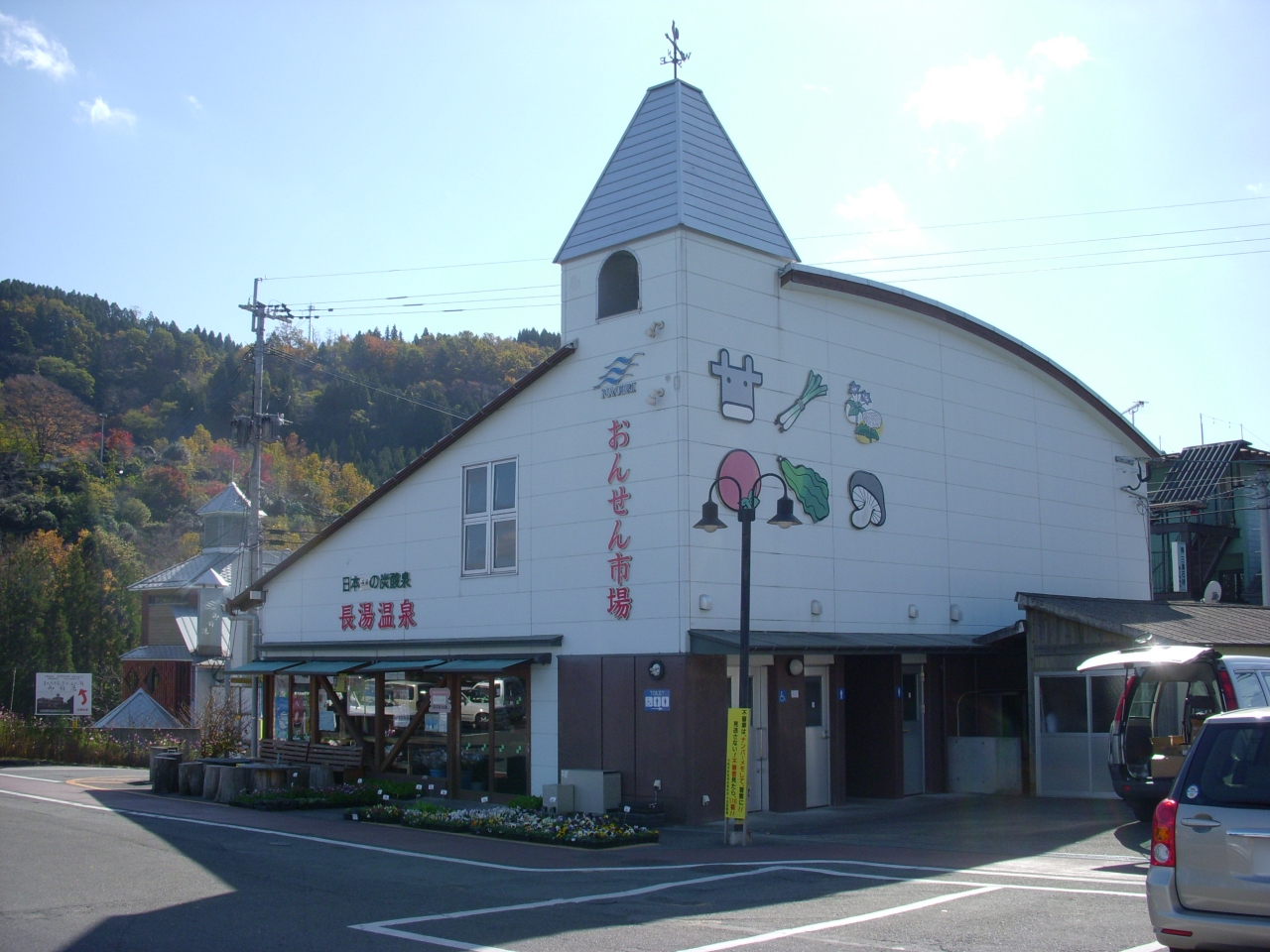
Nagayu Onsen is the roadside station of Japan's most famous carbonated springs — the schprudel of the Serikawa river valley in Taketa city, where the spring water fizzes with natural CO₂ and has drawn bathers since the Edo period. Goethe himself is quoted on the waters here: the German poet's praise of carbonated springs is the town's unlikely coat of arms, repeated on signs around the resort. The station serves the valley as market and information point, a few minutes' walk from the public baths where the famous water pours into open-air pools along the river.
| Location | Hohi, Oita |
|---|---|
| Address | 竹田市直入町大字長湯8043番地1 (竹田市, Oita) Romaji: Taketa-shi Naoiri-machi Nagayu 8043-1, Oita, Japan |
| Opening hours | Shop: 8:00–18:00 / Gozen-yu municipal hot spring: 6:00–21:00 (Dec 31–Jan 1 until 17:00; Jan 2–3 until 19:00) / Tourist information: 9:00–17:30 |
| Closed | New Year holidays; 3rd Wednesdays |
| Parking | Large vehicles: 5 spaces; Standard cars: 62 spaces (including 3 accessible spaces) |
| Phone | 0974-75-2805 |
| Map | View on Google Maps |
| Official website | http://www.qsr.mlit.go.jp/n-michi/michi_no_eki/kobetu/nagayu/nagayu.html |
| Registered | 2006 (registration round 22) |
Facilities at a glance
All facilities
Local specialities
The valley's tastes are mountain tastes: shiitake mushrooms from the oak forests of the Kuju foothills, bamboo shoots, river fish and the farm produce of the Serikawa valley, with Taketa's wider larder — chestnuts, kabosu citrus and sake — on the shelves. The wellness angle is the real local line: drinks and sweets made with the carbonated spring water, and the bath-side goods of a resort that sells rest itself. In autumn the mushroom season fills the market; the rest of the year, the station is where the valley buys its own produce back.
Sights and surroundings
The baths are the destination: Nagayu's public open-air baths sit along and even in the Serikawa river — the great riverside rotenburo pools where bathers soak in fizzing water under the valley's cliffs. The resort town behind them keeps the quiet scale of an old toji (hot-spring cure) settlement, with inns that have hosted long-stay bathers for generations. Taketa city, the castle town of the Oka domain, is the side trip: castle ruins on their cliff, samurai streets, and the Taketa music connection — Rentaro Taki, composer of “Kojo no Tsuki”, grew up under the castle's walls.
Making the most of your stop
The station is the valley's anteroom; the baths are the house. Use it in that order: market and information first (the shiitake and valley produce are freshest early), then walk into Nagayu Onsen town for the main event — the public open-air baths along the Serikawa river, where the carbonated water fizzes against your skin exactly as it has for centuries of toji cure-stays. Day-trippers should know these are proper public baths with local regulars: the etiquette is quiet, unhurried and tattoo-aware in the traditional manner. Goethe's quoted praise of the waters, repeated around the town, makes a better souvenir story than anything gift-wrapped. Taketa city folds into the same day: the castle ruins on their cliff, the samurai district, and the Rentaro Taki connection — “Kojo no Tsuki”, the moon over the ruined castle, was composed for this very view. In autumn, the Kuju foothills' mushroom season fills both the market and the menus; in every season, the drive out along the Serikawa at dusk, steam rising off the river baths, is the valley's signature farewell.
Practical details checked 2026-11-04 against: the National Michi-no-Eki Association station page (michi-no-eki.jp), read 2026-11-04
Source: station details from the Kyushu Michi-no-Eki portal (Kyushu Regional Development Bureau) and the national Michi-no-Eki association — https://www.michi-no-eki.jp/stations/views/19769