Michi-no-Eki Ooboke 大歩危
Ooboke stands where the Yoshino River cuts its famous gorge through the Shikoku mountains — a designated national scenic spot and natural monument of green water, white rapids and folded rock. The station is the gorge's base: viewing points for the Oboke and Koboke rapids, the boats that ride them, and — in the same building — the Yokai Yashiki (monster house) and Stone Museum, celebrating the bakemono folklore of these once-remote valleys and the strange stones the river produces. Few stations in Japan pair a natural wonder this grand with a haunted house this cheerful.
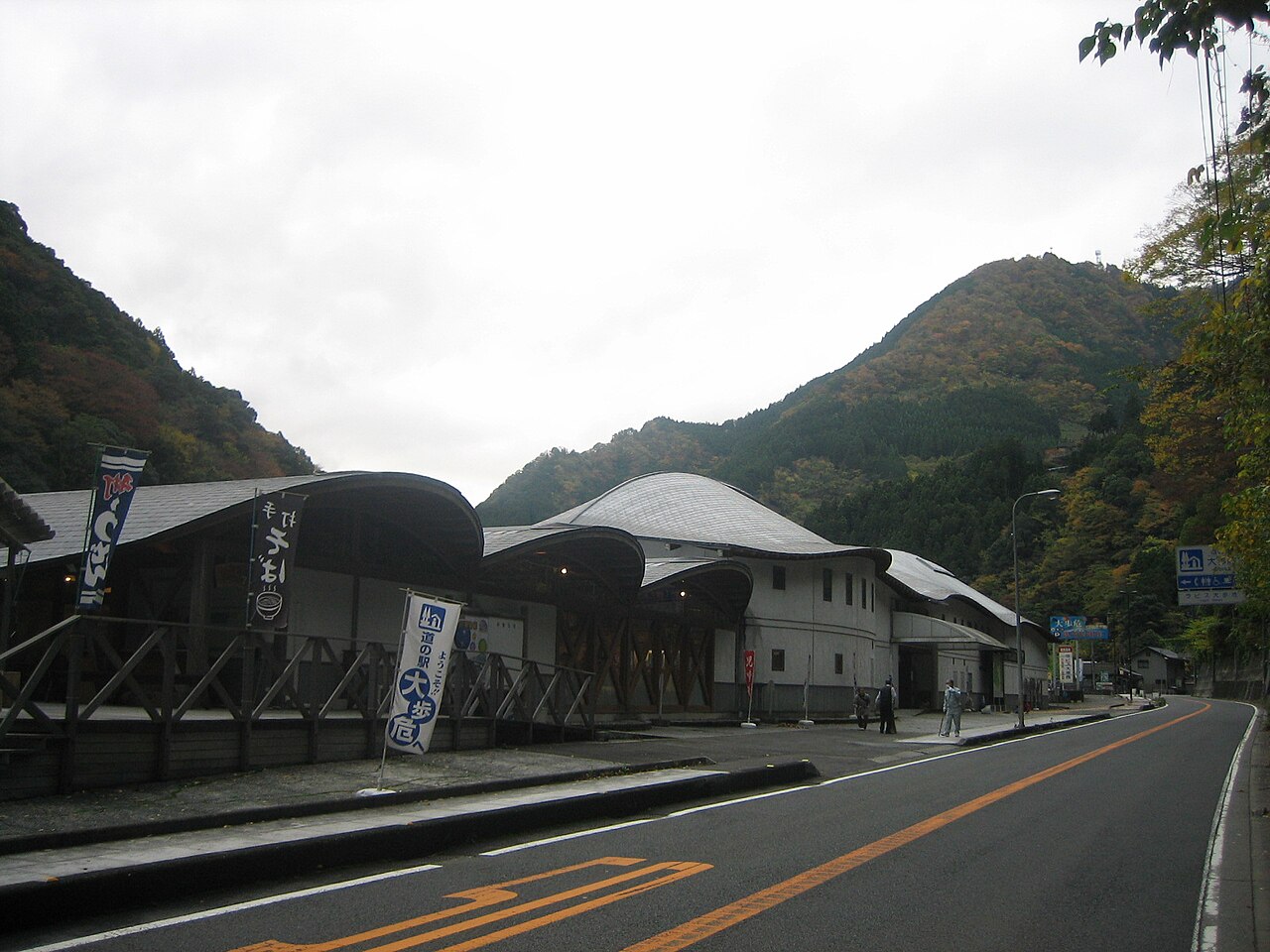
| Location | Western Tokushima, Tokushima |
|---|---|
| Address | 三好市山城町上名1553-1 (三好市, Tokushima) Romaji: Miyoshi-shi Yamashiro-cho Kamina 1553-1, Tokushima, Japan |
| Opening hours | 9:00–17:00 |
| Closed | Tuesdays (Dec–Feb; next day if a holiday) |
| Parking | Large vehicles: 4 spaces; Standard cars: 19 spaces (including 2 accessible spaces) |
| Phone | 0883-84-1489 |
| Map | View on Google Maps |
| Official website | https://yamashiro-info.jp/ |
| Registered | 2008 (registration round 28) |
Facilities at a glance
All facilities
Local specialities
The monster trade leads: goods of the local yokai — above all the Konaki-jiji, the old-man-faced baby of the valley's tales (and of GeGeGe no Kitaro fame) — fill the souvenir corner, alongside accessories cut from the gorge's natural stones. The Stone Museum displays rare stones gathered from the world's rivers and Japan's, polished into the valley's other speciality craft. For eating, the station covers the Iya valley's mountain cooking — river fish, buckwheat and the preserved foods of the isolated hamlets that once made this one of Japan's three great hidden regions.
Sights and surroundings
The gorge is the sight: from the station, the road and the viewing platforms trace the Yoshino's emerald pools and the sculpted schist of Oboke (“big steps”) and Koboke (“small steps”) — named, legend says, for how carefully you had to walk the old cliff paths. Sightseeing boats ride the calm reach between the rapids. Inland climbs the Iya valley, the “hidden region” of vine bridges (kazurabashi) woven across the river, thatched hamlets on impossible slopes and the scarecrow village of Nagoro. The whole district rewards slow driving: every tunnel opens on another fold of green water and rock.
Making the most of your stop
The gorge first, while the light is in it: from the station, the viewing points over Oboke and Koboke are a short hop, and the sightseeing boats on the calm reach between the rapids run through the day — the sculpted schist and emerald pools are at their best from the water. Rain changes the calculus rather than ruining it: the river rises, the rapids whiten, and the gorge turns theatrical. Back at the station, give the Yokai Yashiki its due — the monster folklore of these valleys is not decoration but the cultural record of a once-isolated region, and the Konaki-jiji goods are the stop's definitive souvenir — and the Stone Museum's world river stones repay more time than you expect. Drivers continuing into the Iya valley should stock here: the vine-bridge country ahead has hamlets, not shops, and the mountain roads are slow in the best sense. This station is the last full service before one of Japan's great hidden regions, and it knows it — information, food and monsters, all under one roof.
Practical details checked 2026-11-04 against: the National Michi-no-Eki Association station page (michi-no-eki.jp), read 2026-11-04
Source: station details from the Shikoku Regional Development Bureau Michi-no-Eki portal and the national Michi-no-Eki association — https://www.michi-no-eki.jp/stations/views/19625
More roadside stations in Tokushima
- Sadamitsu Yuyu Kan 貞光ゆうゆう館
- Nishiiya にしいや
- Ai Land Udatsu 藍ランドうだつ
- Mino 三野
- Mima No Sato みまの里
- Washi No Sato 鷲の里
- Shishikui Onsen 宍喰温泉
- Donari どなり